

The Big Data
What is Big Data Technology?
Big Data Technology can be defined as a Software-Utility that is designed to Analyse, Process and Extract the information from an extremely complex and large data sets which the Traditional Data Processing Software could never deal with.
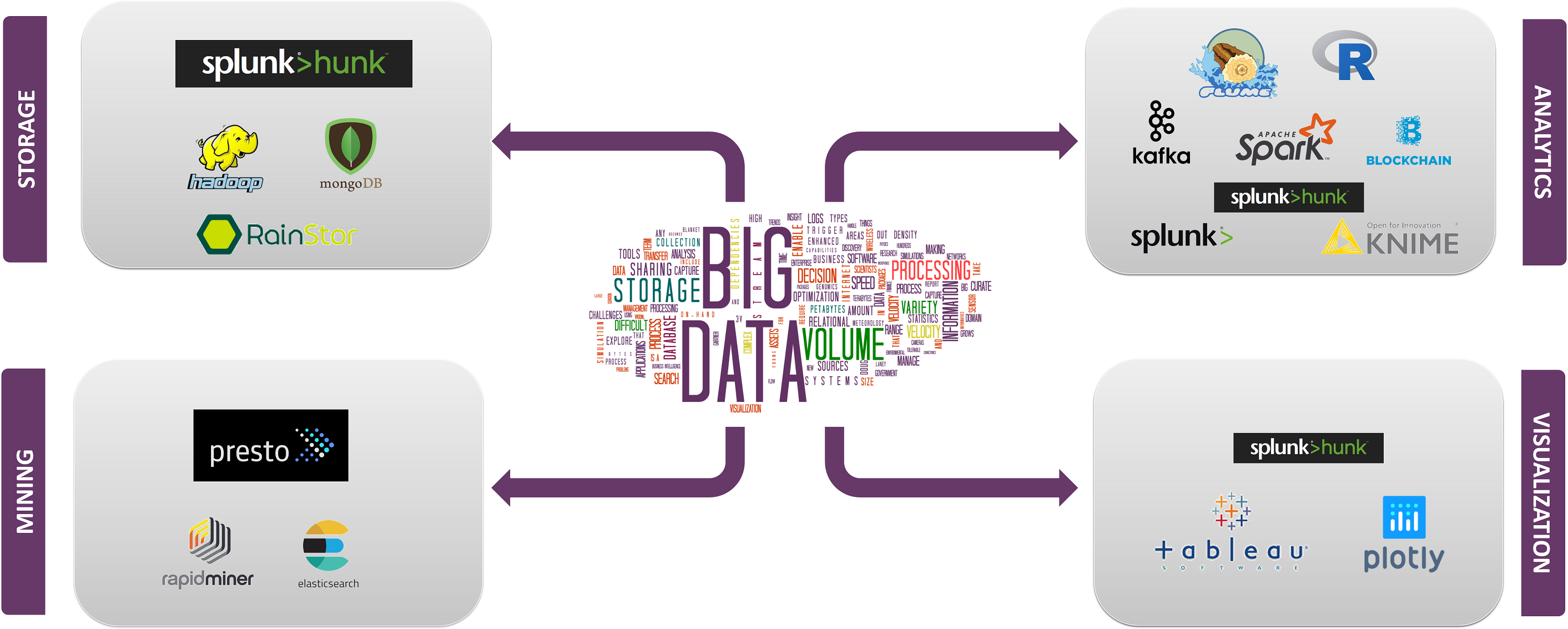
The Three Vs of Big Data
Volume
The amount of data matters. With big data, you’ll have to process high volumes of low-density, unstructured data. This can be data of unknown value, such as Twitter data feeds, clickstreams on a webpage or a mobile app, or sensor-enabled equipment. For some organizations, this might be tens of terabytes of data. For others, it may be hundreds of petabytes.
Velocity
Velocity is the fast rate at which data is received and (perhaps) acted on. Normally, the highest velocity of data streams directly into memory versus being written to disk. Some internet-enabled smart products operate in real time or near real time and will require real-time evaluation and action.
Variety
Variety refers to the many types of data that are available. Traditional data types were structured and fit neatly in a relational database. With the rise of big data, data comes in new unstructured data types. Unstructured and semistructured data types, such as text, audio, and video, require additional preprocessing to derive meaning and support metadata.
Big Data Use Cases
Product Development
Predictive Maintenance
Customer Experience
Fraud and Compliance
Machine Learning
Operational Efficiency
Drive Innovation
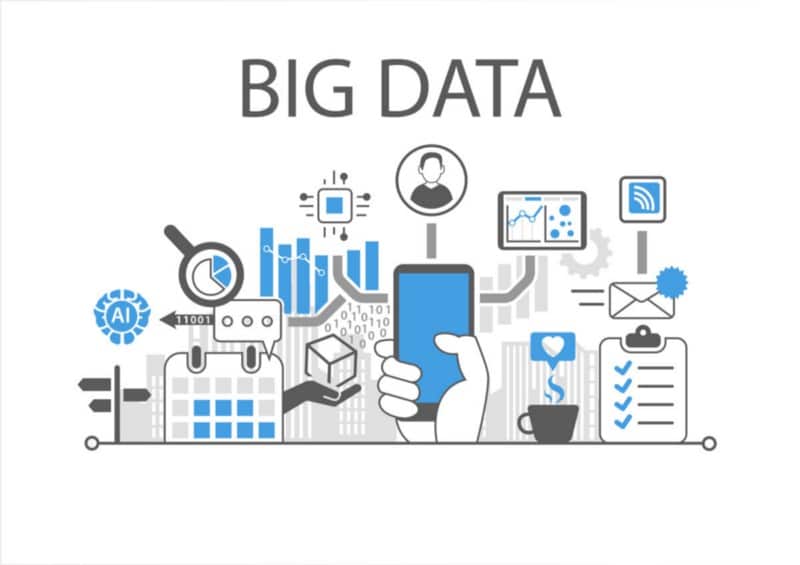
Top Big Data Technologies
Top big data technologies are divided into 4 fields which are classified as follows:
- Data Storage
- Data Mining
- Data Analytics
- Data Visualization
How Big Data Works
Big data gives you new insights that open up new opportunities and business models. Getting started involves three key actions:
1. Integrate
Big data brings together data from many disparate sources and applications. Traditional data integration mechanisms, such as ETL (extract, transform, and load) generally aren’t up to the task. It requires new strategies and technologies to analyze big data sets at terabyte, or even petabyte, scale.
During integration, you need to bring in the data, process it, and make sure it’s formatted and available in a form that your business analysts can get started with.
2. Manage
Big data requires storage. Your storage solution can be in the cloud, on premises, or both. You can store your data in any form you want and bring your desired processing requirements and necessary process engines to those data sets on an on-demand basis. Many people choose their storage solution according to where their data is currently residing. The cloud is gradually gaining popularity because it supports your current compute requirements and enables you to spin up resources as needed.
3. Analyze
Your investment in big data pays off when you analyze and act on your data. Get new clarity with a visual analysis of your varied data sets. Explore the data further to make new discoveries. Share your findings with others. Build data models with machine learning and artificial intelligence. Put your data to work.

Big Data Best Practices
Align Big Data with Specific Business Goals
Ease Skills Shortage with Standards and Governance
Optimize Knowledge Transfer with a Center of Excellence
Top Payoff Is Aligning Unstructured with Structured Data
Plan Your Discovery Lab for Performance
Align with the Cloud Operating Model
Big data processes and users require access to a broad array of resources for both iterative experimentation and running production jobs. A big data solution includes all data realms including transactions, master data, reference data, and summarized data. Analytical sandboxes should be created on demand. Resource management is critical to ensure control of the entire data flow including pre- and post-processing, integration, in-database summarization, and analytical modeling. A well-planned private and public cloud provisioning and security strategy plays an integral role in supporting these changing requirements.


0 Comments